If you have your eye on a Park Hill bungalow, you are not alone. These homes stand out for their charm, front porches, and lived-in character, but they can also raise real questions for a first-time buyer about price, condition, and what you are really getting. This guide will help you understand what makes a Park Hill bungalow different, what to watch for before you write an offer, and how to buy with more confidence in a competitive Denver market. Let’s dive in.
Why Park Hill bungalows stand out
Park Hill has a long development history, and that matters when you start shopping. The neighborhood was platted in 1887, with major building waves in the 1920s and 1930s and again in the 1940s and 1950s. That is why you will see a mix of home styles here instead of one uniform look.
For you as a first-time buyer, that means a bungalow in Park Hill is rarely a simple starter home template. It is usually an older home with distinct design features, different update histories, and a floor plan that may feel very different from newer construction. That mix is part of the appeal, but it also means you need to evaluate each home on its own merits.
Park Hill was also marketed early on as a tree-lined residential area near City Park. That legacy still shows up today in the feel of the streetscape and the draw of older homes with architectural personality. If you love homes that feel established rather than interchangeable, this niche can be a strong fit.
What counts as a bungalow
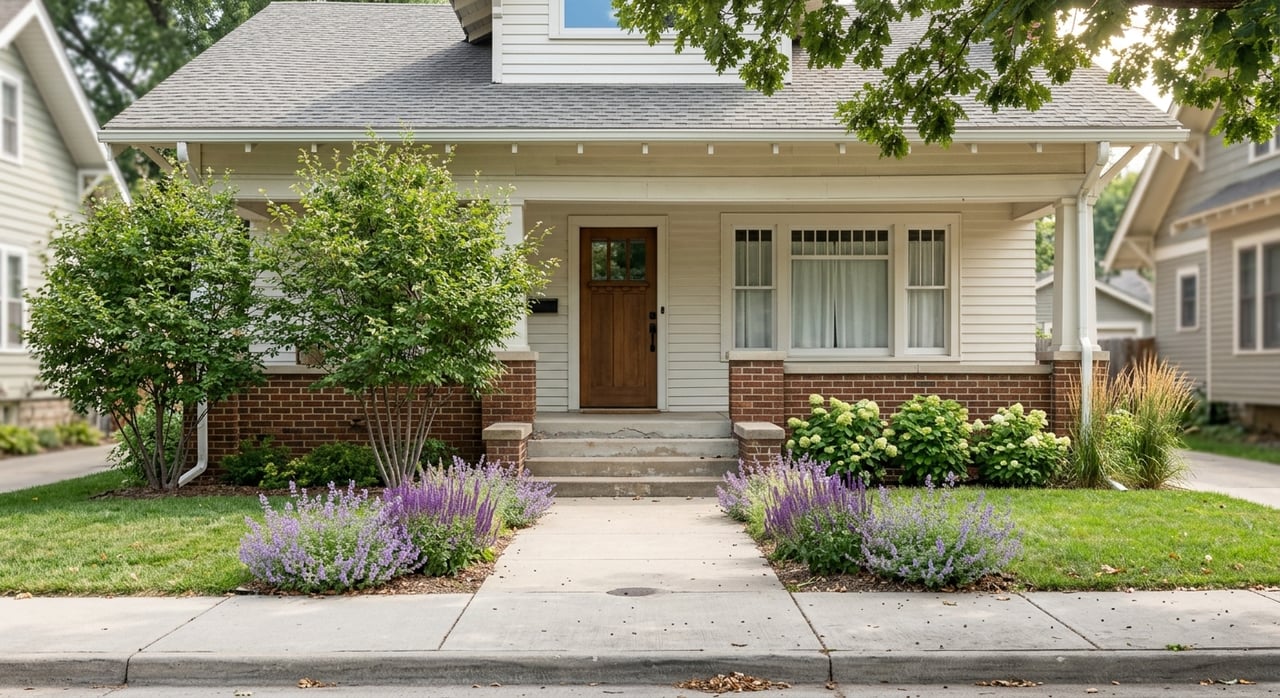
A classic bungalow usually has one story or one-and-a-half stories, a low-pitched gabled roof, wide overhanging eaves, and a full or partial front porch. You may also notice exposed rafters or braces and porch posts that taper toward the top. Inside, the front door often opens right into the living room, and the living and dining spaces may be divided by a half wall or another subtle transition.
In Park Hill, though, the label can get a little blurry. Some listings use “bungalow” loosely for Craftsman-style homes, including some two-story houses. That is why it helps to focus less on the marketing term and more on the actual layout, square footage, and how the home lives day to day.
You may find features like covered porches, main-floor bedrooms, finished basements, flexible lower levels, and detached or newer garages. That range can be helpful if you want character but also need usable bonus space. Still, one bungalow may feel compact and simple, while another may be much larger and more updated.
Size matters as much as style
One of the biggest mistakes first-time buyers make is assuming all Park Hill bungalows are roughly the same. They are not. Recent examples show a wide size spread, from a 1924 home at 1,142 square feet to a 1914 Craftsman bungalow at 2,483 square feet.
That kind of variation affects everything from price to storage to future flexibility. A home with a finished basement may function very differently from a similar-looking house without one. Bedroom count, ceiling height in lower levels, and garage setup can all matter just as much as curb appeal.
When you tour homes, try to compare them by function first. Ask yourself how the layout fits your life now, how much updating you can realistically take on, and whether the square footage is where you actually need it. A charming front porch is great, but the home still has to work for your budget and daily routine.
What first-time buyers should expect on price
Park Hill is not an entry-level market in the traditional sense, and it helps to go in with realistic expectations. In March 2026, the median sale price in Park Hill was reported at $705,000, with a median price per square foot of $428 and a median of 23 days on market. The neighborhood was described as very competitive.
The broader Denver market was active too. REcolorado reported a Denver metro median closed price of $600,000 in April 2026 and about two weeks of inventory. DMAR also reported that the best listings were getting two to three offers and often selling at asking price or about $10,000 to $15,000 over.
For bungalow-style homes in Park Hill, the range can be especially wide. Recent examples included sales from the mid-$600,000s to the low-$900,000s, while larger or more fully remodeled homes sold above $1 million. In practical terms, condition, lot, finish level, and usable square footage can drive price just as much as the Park Hill name itself.
How to set a smart budget
In a neighborhood with older housing stock and steady competition, your budget needs to do more than cover the purchase price. It should also reflect the kind of home you are buying. A lower-priced bungalow that needs work may not actually be the cheaper option once repairs and updates are factored in.
A good starting point is to keep your personal budget ceiling separate from the maximum a lender approves. That gives you room to think clearly about monthly payment comfort, future maintenance, and the cost of any near-term projects. It also helps you avoid stretching just to win a home that may still need meaningful work.
You should also compare Loan Estimates from at least three lenders before you get deep into the search. That makes it easier to understand your true borrowing costs and gives you a stronger foundation when the right home comes up. In a fast-moving market, preparation can be a real advantage.
Common bungalow updates to plan for
Many Park Hill bungalows are older homes, so it is smart to expect some level of improvement planning. Function-first updates are often the priority. These can include roof work, insulation and air sealing, drafty windows and doors, electrical or plumbing updates, and basement or crawlspace improvements.
Some buyers also consider selective floor-plan changes to improve flow. If that is on your wish list, remember that Denver permits are required for floor-plan changes, load-bearing wall changes, and many alterations involving windows, doors, skylights, egress, rerouted ductwork, or relocated electrical and plumbing fixtures. Some projects may also require sewer use and drainage permits.
For energy performance, older homes often benefit from insulation and air sealing improvements. Drill-and-fill wall insulation is one common approach in older houses. Even if you are not planning a full remodel, it helps to understand where comfort and efficiency upgrades may be needed.
Be careful with exterior changes
Part of the appeal of a bungalow is its architectural detail. Porches, rooflines, and front elevations are often defining features, not just cosmetic extras. Early 20th-century bungalow porches commonly include tapered posts, exposed beams, and low-pitched roofs with wide overhangs.
That matters if you are thinking ahead about renovations. Exterior changes can affect both the look and feel that drew you to the home in the first place. If a property is individually landmarked or located in a historic district, Denver reviews exterior work, additions, and demolition.
In those cases, roof permits and some other exterior quick permits require Landmark Preservation review and, in many situations, a Certificate of Appropriateness. If you love the idea of restoring or updating a bungalow, it is worth confirming what review process may apply before you buy.
How to compete without overreaching
In Park Hill, timing and preparation matter. The practical goal is to be fully ready before the right bungalow hits the market, not after. That starts with getting preapproved before you shop seriously, since sellers often expect it.
It is also important to remember that a preapproval is still tentative. You should avoid taking on new debt or making big credit purchases during your home search, since changes to your finances can affect your loan. Staying financially steady gives you more control when it is time to act.
Beyond that, decide ahead of time how much repair work and monthly payment pressure you can comfortably accept. That makes it easier to move quickly without making a rushed decision. In a competitive setting, clarity is just as important as speed.
Build a comfortable offer strategy
A strong offer is not always the highest number on paper. For a first-time buyer, comfort and risk management matter too. Financing and satisfactory-inspection contingencies can help protect you while still allowing you to compete.
It also helps to understand that a home inspection is different from an appraisal. An appraisal supports the lender’s valuation, while an inspection helps you evaluate the condition of the home. Once you choose a property, hiring an independent inspector as soon as possible can help you make an informed next step.
With older bungalows, this step is especially important. The right home may absolutely be worth pursuing, but you want a clear picture of major systems, deferred maintenance, and likely near-term costs before you move forward with confidence.
What to prioritize on tours
When you walk through Park Hill bungalows, try to look past staging and focus on the bones of the home. Pay attention to layout, natural light, ceiling height, basement usability, and how the kitchen and bathrooms function for your needs. These practical details will shape your experience long after move-in day.
It is also wise to note signs of updates versus signs that systems may be aging. A beautifully finished room does not always tell you whether the electrical, plumbing, insulation, or roof have been addressed. In older homes, looks and function do not always move in sync.
Finally, think about tradeoffs in advance. You may prefer a smaller home with stronger condition, or a larger one with a basement that gives you room to grow. If you know your priorities before you tour, it is much easier to recognize the right fit when it appears.
Why local guidance matters
Buying a first home in Park Hill is part financial decision and part design and lifestyle choice. The homes are varied, the pricing can shift based on condition and layout, and the most appealing properties can move quickly. That combination rewards buyers who are educated, realistic, and well prepared.
A neighborhood-specific strategy can help you sort through the noise. Instead of treating every bungalow as interchangeable, you can compare homes based on architecture, update level, market position, and your own comfort with future projects. That is often the difference between simply getting under contract and feeling good about the home you chose.
If you are thinking about buying in Park Hill and want clear, practical guidance, Katie Knop can help you build a smart plan, understand the tradeoffs, and move with confidence when the right bungalow comes along.
FAQs
What is a Park Hill bungalow for first-time buyers?
- A Park Hill bungalow is typically an older character home, often one or one-and-a-half stories, with features like a low-pitched roof, wide eaves, and a front porch. In Park Hill, the term may also be used more loosely, so it is important to evaluate the actual floor plan and size.
How much do Park Hill bungalows cost?
- Prices vary widely based on size, condition, lot, and finish level. Park Hill’s median sale price was reported at $705,000 in March 2026, and recent bungalow-style sales ranged from the mid-$600,000s to well above $1 million.
What should first-time buyers check in an older Park Hill home?
- Focus on function-first items such as the roof, insulation, air sealing, windows and doors, electrical, plumbing, and basement or crawlspace condition. These items can affect both comfort and future costs.
Are Park Hill bungalows competitive to buy?
- Yes. Market data showed Park Hill as very competitive, with a median of 23 days on market, while broader Denver data pointed to limited inventory and multiple-offer activity on strong listings.
Do Park Hill bungalow renovations need permits?
- Many do. In Denver, permits are required for projects like floor-plan changes, load-bearing wall work, certain window and door changes, egress work, rerouted ductwork, and relocated electrical or plumbing fixtures.
Do historic rules affect Park Hill bungalow exteriors?
- They can. If a property is individually landmarked or in a historic district, Denver reviews exterior work, additions, and demolition, and some projects require Landmark Preservation review and a Certificate of Appropriateness.